A tooth that throbs on its own, wakes you at night, or hurts long after hot coffee is usually a tooth with an infected nerve. A root canal removes that nerve, clears the infection and keeps the tooth. Call (863) 555-0170 and we'll see you the same day, Monday through Friday, 8:00 AM to 2:00 PM.
The $70 is a minimum fee for patients paying without insurance. It covers a limited, problem-focused emergency exam (ADA code D0140) and the X-ray needed to diagnose the tooth. Treatment is priced separately and quoted to you in writing before any work starts.
Same-day appointments · $70 exam + X-ray · Phones answered 24/7 · Se habla español
Signs you need an emergency root canal today
A nerve that's dying sends a particular kind of pain. If you recognize yourself in this list, call today rather than next week:
- Pain that throbs with your pulse, especially when you lie down
- A tooth that stays sore for minutes after something hot, or that now hurts from heat but feels better from cold
- Pain when you bite or tap the tooth
- A pimple-like bump on the gum near the tooth, sometimes with a salty taste
- A tooth that has turned grey or darker than its neighbors after an old injury
- Swelling in the gum or cheek beside one specific tooth
Infection that spreads beyond the tooth turns into an abscess. If your face is swelling fast or you have a fever, read our abscess page and don't wait.
What happens at your same-day visit
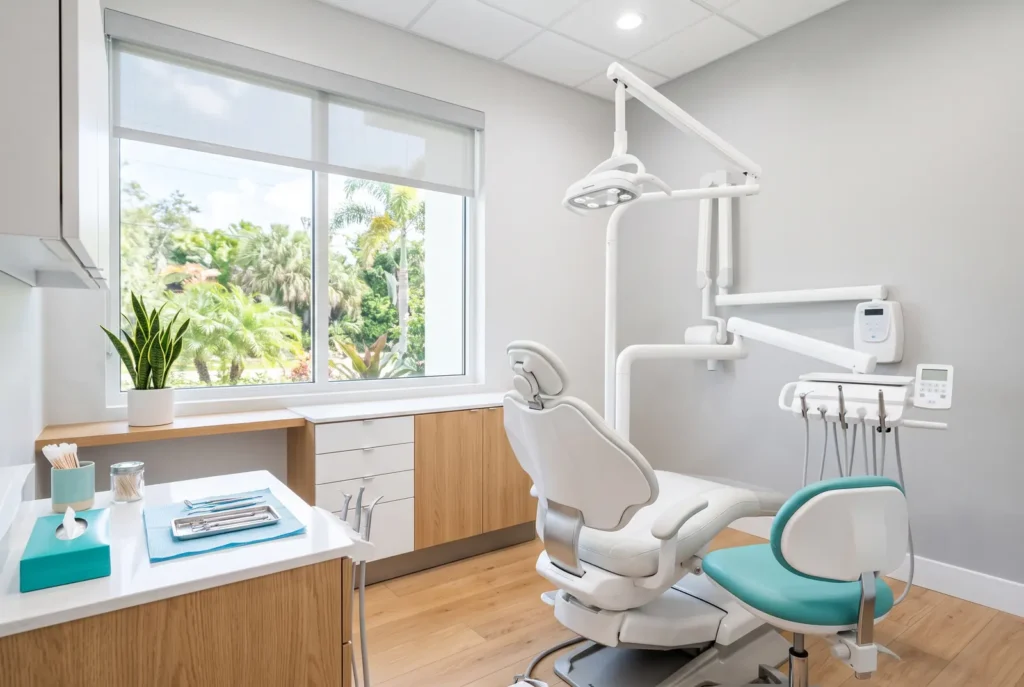
Our dentist examines the tooth, tests how it responds to cold and to tapping, and takes an X-ray. The X-ray shows whether the nerve is involved and whether infection has reached the bone at the root tip. You get a clear explanation and a written price before anything starts.
If you go ahead, the tooth is numbed until it's completely quiet. A small opening is made in the biting surface, the infected nerve tissue is removed from the canals inside the roots, the canals are cleaned, shaped and sealed, and the opening is closed with a filling. The pain that brought you in is usually gone by the time the numbness wears off, because the nerve that was screaming is no longer there.
Many emergency root canals are finished in one visit. A tooth with heavy infection sometimes gets medicine placed inside and a temporary seal, with the final filling at a second visit once it settles. Back teeth generally need a crown afterward to protect them from cracking; our dentist will tell you if yours does.
Cost of an emergency root canal in Winter Haven
The visit starts with the exam and X-ray, $70 for patients paying without insurance. The root canal is priced separately and depends on the tooth: a front tooth has one canal, a molar has three or four. Our dentist writes the price down before starting. We accept most PPO dental plans and several Medicare Advantage plans, and Cherry and CareCredit financing are available. Details are on our cost and insurance page.
Why patients choose our Winter Haven office
Same-day appointments, an 8:00 AM opening, and a phone that a person answers at 3:00 AM as readily as at noon. The exam, X-ray and root canal all happen in our office, and the same dentist who diagnoses the tooth treats it. If the tooth turns out to be unsaveable, we tell you plainly and talk through extraction instead. Spanish-speaking staff during office hours.
Emergency root canal near you in Winter Haven
We're at 1178 Havendale Blvd NW, Winter Haven, FL 33881, on Havendale Boulevard NW just west of US 17, a few minutes from Inman Park and Spring Lake. Patients come from Inwood along Havendale, from Lake Alfred down US 17, and from Cypress Gardens via Cypress Gardens Boulevard and US 17. Parking on site.
Frequently asked questions
Can a root canal be done the same day?
Often, yes. Call (863) 555-0170 during office hours, and once our dentist confirms the diagnosis and you approve the written price, the procedure usually starts right then. Heavily infected teeth sometimes need a two-step approach with medicine placed inside first. Either way, the pain is dealt with at the first visit.
Is a root canal painful?
The procedure itself feels like a long filling. The tooth is fully numbed first, and the pain most people fear is the pain of the infected nerve, which the root canal removes. Some tenderness when biting for a few days afterward is normal and fades.
Root canal or extraction, which is better for me?
If the tooth has enough sound structure left and the root isn't cracked, saving it with a root canal is usually the choice our dentists recommend, because nothing replaces a natural tooth as well as the tooth itself. If it's cracked through the root or too broken down, extraction is the honest answer. The X-ray decides, and you'll hear both options.
My tooth stopped hurting on its own. Am I fine?
Probably not. When an infected nerve dies, the pain often stops for a while, but the infection is still there and can turn into an abscess weeks later. A tooth that hurt badly and then went quiet should still be looked at.