Swelling, throbbing and a bad taste at the very back of your mouth often mean a wisdom tooth is infected. Call a dentist and try to be seen within a day. If swelling spreads under your jaw or into your neck, or you have a fever or trouble swallowing or breathing, go to an emergency room.
How wisdom teeth become infected
Wisdom teeth are the last molars to arrive, and many don't have enough room. That leads to:
- Gum infection over a partly erupted tooth. A gum flap traps food and bacteria.
- Deep decay. These teeth are hard to reach with a brush.
- Infection around an impacted tooth. A tooth stuck under the gum or in bone can become infected around its crown.
- Damage to the next molar. A tilted wisdom tooth can trap food against the tooth in front of it.
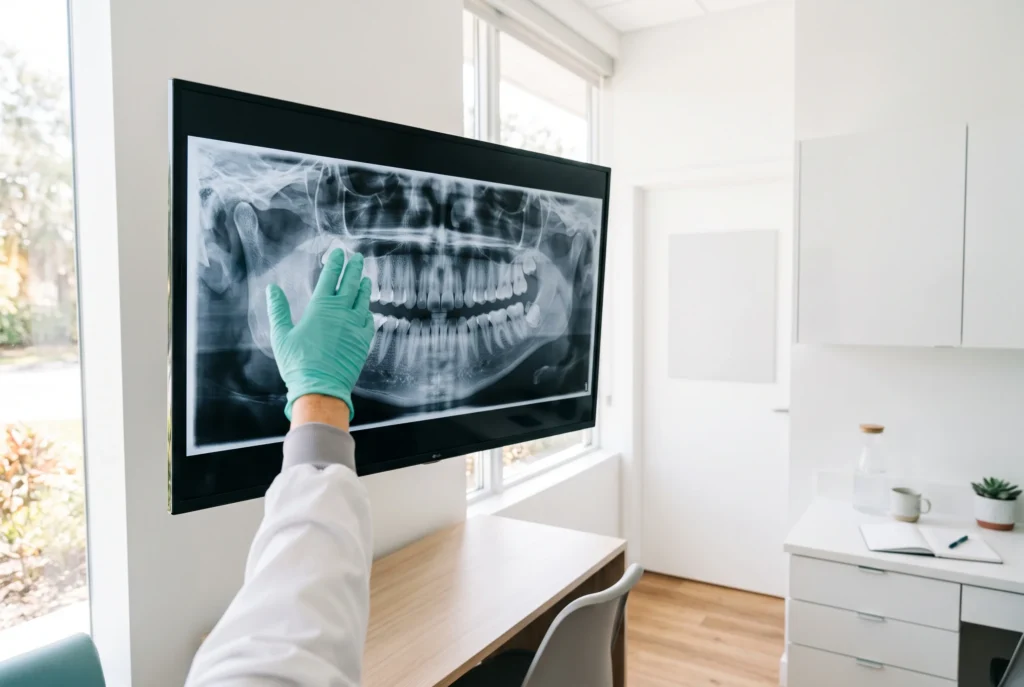
Signs to watch for
- Pain behind the last molar that throbs or spreads to the ear
- Red, puffy gum at the back of the mouth
- A bad taste or pus
- Stiff jaw or trouble opening wide
- Swollen, tender glands under the jaw
- Pain when chewing on that side
When to skip the dentist and go to the ER
- Swelling below the jawline or down into the neck
- A fever, or chills
- Trouble swallowing or breathing
- You can open your mouth only a little
Infections near lower wisdom teeth can spread into the tissues of the neck, so these signs shouldn't wait.
Comfort until your visit
- Rinse with warm salt water after meals.
- Brush the area gently with a soft brush.
- A pharmacy pain reliever can help; keep to the package dose.
- A wrapped ice pack against the jaw, in 15-minute rounds, eases swelling.
- Eat soft foods on the other side.
Don't cut or poke the gum, and don't place aspirin on it.
What can often happen at a same-day visit
After an exam and an X-ray, the dentist may be able to:
- Wash out trapped food and bacteria from under the gum
- Open and drain a pocket of pus
- Write a prescription for antibiotics when the infection has moved beyond the tooth
- Take the tooth out, when swelling is under control and the tooth sits in a safe position
If the tooth is deeply impacted or the swelling is severe, the infection may be treated first and the tooth removed at a later visit. The ADA lists swelling and infection among dental emergencies. Our wisdom tooth pain page explains more.
Outside resources
If you want to read more, try these:
- Mayo Clinic: Impacted wisdom teeth: symptoms and complications
- American Dental Association: Wisdom teeth: why they cause trouble and when they come out
Frequently asked questions
Can I just take antibiotics?
Pills can settle a flare, yet a tooth that stays half-covered or decayed tends to get infected again.
Do all wisdom teeth need to come out?
No. Teeth that are healthy, fully in and easy to clean may be fine. Ones that keep getting infected often need removal.
Why does my ear hurt?
Lower wisdom teeth share nerve pathways with the ear, so the ache often travels there.
If you're in Winter Haven
Our Havendale Boulevard office sees same-day emergencies Monday to Friday, 8:00 AM to 2:00 PM. Call (863) 251-5526 early in the day, when same-day openings are easier to find. After hours, an answering service picks up. For patients paying without insurance, the emergency exam and X-ray are $70.
The $70 covers the emergency exam and X-ray. Treatment is priced separately and explained before any work begins.
For ER signs, the nearest hospital is Winter Haven Hospital. Payment options are on our cost page.
This article is for general education and is not a substitute for an exam by a licensed dentist.